
Apart from the Google team led by AI scientist Manish Gupta, the company will also partner with the research community across the country to focus on tackling challenges in fields like healthcare, agriculture, and education.


Telecom Minister Ravi Shankar Prasad said that there were 31 complaints of call drops against the company in 2015
Mukesh Ambani-led Reliance Jio has introduced a 20-per cent cashback offer on select prepaid plans, intensifying competition in the Indian telecommunications (telecom) market. Jio is the largest telecom service provider in India, with 443 million subscribers as of July. Jio's cashback offer will drive cross-selling across Reliance's various retail businesses, but the move is also being seen by some analysts as a signal that tariff hikes may not be around the corner just yet.

According to a study, the change in frequency for transmitting mobile signals could cost the telcos over Rs 1 lakh crore (Rs 1 trillion) cumulatively.

The move will help telcos, including Reliance Jio, Vodafone, and Idea Cellular

'We are targeting the 5G tender around January-March 2023.'

Customers of Vodafone, Idea Cellular, Tata Teleservices and BSNL in some circles have reported maximum discrepancies in their phone bills, according to a latest report by telecom regulator TRAI.

Around 1,200 protesters demanding scrapping of the amended citizenship act were detained on Thursday when they defied prohibitory orders imposed by the Delhi Police in Red Fort area. Internet, voice and messaging services by Airtel, Vodafone, Idea and Reliance Jio were suspended in parts of Delhi-NCR, in perhaps for the first time that the national capital experienced such restrictions.

Listed companies' net profit as a percentage of gross domestic product (GDP) has hit a decadal high and is expected to edge even higher over the next two financial years. According to an analysis by ICICI Securities, India's Inc net profit stood at Rs 8.4 trillion, or 4 per cent of GDP of Rs 210 trillion for the trailing 12-month period ending September. This is the highest since financial year 2011-12 (FY12), when it was at 4.6 per cent.

Reliance-Google's new smartphone has got mixed reviews from analysts and brokerages. The phone pricing is seen unattractive for low-end customers and bundled offers are being viewed as non-disruptive. While this could slow the pace of adoption, it could set the stage for tariff hikes in the industry, feel analysts.

Vodafone-Idea is working on a multi-pronged strategy to begin its long journey to get back in the game but much hinges on how much money it can raise following the government's decision to go for equity conversion last week. Based on discussions with sources aware of the company developments and with vendors, VIL's immediate plan is to invest in increasing 4G coverage to the level of its competitors. Currently, it covers a 1 billion population with 4G while its competitors cover 1.2 billion people.
To help 2G customers who have to buy a new phone to upgrade to 4G, the company had earlier introduced 4G feature phones, to make it affordable for them to make the switch.

The Department of Telecom may bar operators holding 3G airwaves from sharing the high-speed spectrum.

The government is engaged in talks with telecom firms for a launch of commercial 5G services in some cities by Independence Day and has assured them that spectrum auction will take place in April-May, providing them a three to four-month window for the rollout. A top executive of a leading telecom gear company said the deadline was feasible in some cases. "It can be achieved in some cities as it will take us 4-6 weeks to deploy a network, once the equipment or components have reached India.

Bharti Airtel and Vodafone Idea have communicated to the telecom department that they will not pay AGR dues of Rs 88,624 crore, the deadline for which ended on Thursday, and will wait for the outcome of modification petition listed for hearing before the Supreme Court next week, according to official sources. Reliance Jio on Thursday paid Rs 195 crore to the telecom department to clear all adjusted gross revenue dues accounted till January 31, 2020, according to an official source.

The job market saw an uptrend in the March quarter (Q1), with job interviews increasing 13.71 per cent quarter-on-quarter (QoQ) to over 30 million, according to Apna.co, India's largest jobs and professional networking platform. It recorded a 42 per cent QoQ growth in its employer base. As a result of the second wave of Covid-19 last year, sectors such as healthcare, delivery, and e-commerce were booming while others had fairly low employment.

The list of companies skipping dividends in FY19 includes some of the country's largest firms and industry leaders such Tata Motors, Avenue Supermart, Future Retail and Vodafone Idea, among others.

The new proposals will lead to complex processes and huge costs for telecom service providers, without any substantial benefits: COAI

Billionaire Gautam Adani's group is said to be planning a surprise entry into the race to acquire telecom spectrum, which will pitch it directly against Mukesh Ambani's Reliance Jio and telecom czar Sunil Bharti Mittal's Airtel, sources said. Applications for participating in the July 26 auction of airwaves, including those capable of providing fifth-generation or 5G telecom services such as ultra-high-speed internet connectivity, closed on Friday with at least four applications. Jio, Airtel and Vodafone Idea -- the three private players in the telecom sector -- applied, three sources with knowledge of the matter said.

Revenue decline has left the operators with little money to service their mostly 3G and partly 4G infrastructure leading to poor data and voice quality.

Analysts said even though the Indian economy is expected to slow down to 7.2 per cent in fiscal 2020, it is still the best bet for investment for foreign investors.

The market valuation of Reliance Industries, the country's most valued firm, is fast nearing the Rs 10 lakh crore mark, surpassing British energy major BP Plc.
Just to promote govt's policy of Make in India, BSNL said, it cannot afford to procure sub-standard equipment from inexperienced companies, not having proven technology. BSNL complained that when competitors were procuring world-class 4G equipment from experienced vendors, why should BSNL be compelled to procure locally.

Lawyers representing govt point out that telcos, because of the large money they can save if they get a favourable judgement, prefer to fight till all legal options are exhausted


India's telecom subscriber base grew to over 1.17 billion in October with Bharti Airtel maintaining its leadership in mobile subscriber addition that accounts for over 98 per cent of total connections in the country, according to the monthly report released by sector regulator Trai on Wednesday. This is the second consecutive month when Airtel added highest number of subscribers. In September, it had regained the leadership position in subscriber addition after a gap of four years. The Sunil Bharti Mittal-led company added 3.67 million new customers in October, taking its total wireless customer base to 330.28 million in October 2020, the Telecom Regulatory Authority of India's (Trai) report said.

Under another plan, it will offer unlimited voice calling along with 100 SMS per day, 5GB 3G/4G data and free subscription to Wynk Music and Wynk Movies for Rs 1,599

43 rounds of bidding has taken place.

Ajit Mishra, vice president, research, Religare Broking, answers your stockmarket queries.
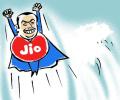
Jio had almost three times higher speed than its nearest rival Bharti Airtel.

Currently, MNP is only available within a state/circle.

'If you are going to have only a handful of telecom players on whom the entire dream of Digital India rests, it's important they are financially sustainable.'

Prime Minister Narendra Modi will launch the much-awaited 5G services in India on October 1, 2022, an official release said on Friday. According to the release, 5G to be launched by the Prime Minister in select cities, will progressively cover the entire country over the next couple of years. The cumulative economic impact of 5G on India is estimated to reach $450 billion by 2035. Capable of supporting ultra-high-speed internet services, the fifth generation or 5G is expected to unleash new economic opportunities and societal benefits, serving as a transformational force for Indian society.

Given the escalating cost of doing business, the revenue opportunity is decreasing and consolidation is an inevitable part of the industry.

'Private banks are well-placed to deliver good performance over the next six months.'

Ajit Mishra, vice president, Research, Religare Broking, answers your queries.

This is the last lot of payments that telcos will make towards deferred spectrum liabilities, as the Union Cabinet had late last year approved a two-year moratorium on such spectrum payment dues.
Reliance Jio's decision to acquire 700 MHz in combination with the possible use of an advanced standalone (SA) 5G network could give it an edge over its rivals, according to most analysts. The dissenters argue that the stiff price tag touching Rs 40,000 crore to grab 10 MHz of spectrum in 700 to provide coverage for its SA 5G network which offers ultra-low latency (unlike non-standalone or NSA), has a long way to go in India in terms of finding use cases that can be monetised. Globally, 700 MHz is a pivotal band which provides huge coverage, indoor penetration (especially useful in India where walls are thick) and is already considered by the European Union to be the 'pioneer band' for 5G, with 3.5 GHz and 26 GHz, both of which were auctioned in India recently.

It came as a surprise to all stakeholders - competing telecom companies (telcos), most analysts and even the government's internal projections on revenues from the 5G auctions. Reliance Jio disrupted all calculations by paying a stiff Rs 40,000 crore to buy 10 MHz of spectrum in the 700-MHz band, globally considered a key band for efficient 5G service coverage, along with the default 3.5 GHz band and the ultra-high speed and low-latency millimetre band of 26 GHz band. So what made Jio pay almost 45 per cent of its total spend in this auction for the 700 MHz band - much more than what it rustled up even for the 3.5 GHz band?
